
1. Introduction
Physics is the branch of science that studies the fundamental laws of nature. It is a discipline that allows us to understand the principles governing all movements, interactions, and energy transformations in the universe. Physics spans a vast range of scales, from subatomic particles to galaxies, playing a crucial role in our daily lives and cutting-edge technological advancements.
In this article, we will thoroughly explore what physics is, its history, fundamental principles, subfields, impact on daily life, and its future importance. Welcome to the story of science!
Before we begin, let me take a second to share a quick fact: there is no mention of Nikola Tesla in this section. However, he is my favorite physicist and one of the greatest in history, so I will dedicate three separate blog posts solely to him. He holds a special place apart from all the others.
2. Definition and Purpose of Physics
Physics is the science that studies matter and energy and how they interact with each other. Its primary objective is to systematically observe nature, explain phenomena, formulate laws, and apply this knowledge for the benefit of humanity. Physicists explore the fundamental principles governing the universe through observation and experimentation.
Physics is deeply intertwined with other scientific fields, including chemistry, biology, engineering, and mathematics. It collaborates with chemistry to understand atomic and molecular structures, intersects with biology in the realm of biophysics, serves as the foundation for technological advancements in engineering, and employs mathematical models and formulas for precise calculations.
The primary objectives of physics include:
- Understanding and explaining natural phenomena: Investigating the causes of natural events such as earthquakes, storms, and lightning.
- Defining the fundamental laws of the universe: Studying principles such as gravity, electromagnetism, and quantum mechanics.
- Facilitating technological advancements: Contributing to developments in electricity, computing, robotics, space exploration, and more.
- Helping us comprehend everyday occurrences: Explaining the motion of vehicles, light refraction, and thermodynamic processes.
3. History of Physics
Physics is one of the oldest scientific disciplines. Since ancient times, humans have sought to understand nature and develop theories to explain observed phenomena. Throughout history, the discoveries made by great physicists have laid the foundations for modern physics.
3.1 Physics in Ancient Times

- Aristotle (384-322 BCE): Laid the foundations of physics and natural philosophy, developing theories about motion and elements. Aristotle’s ideas influenced science for centuries but were later revised with Newtonian mechanics.

- Archimedes (287-212 BCE): Discovered the principle of buoyancy, known as “Archimedes’ Principle,” and made significant contributions to mechanics and engineering. He also formulated the concept of leverage, revolutionizing mechanical engineering.
- Hipparchus and Ptolemy: Worked on modeling celestial movements and studying optics. Ptolemy’s geocentric model of the universe prevailed for centuries until Copernicus’ heliocentric model reshaped astronomy.
3.2 Physics in the Middle Ages and the Islamic World
During the Middle Ages, significant advancements in physics were made in the Islamic world:
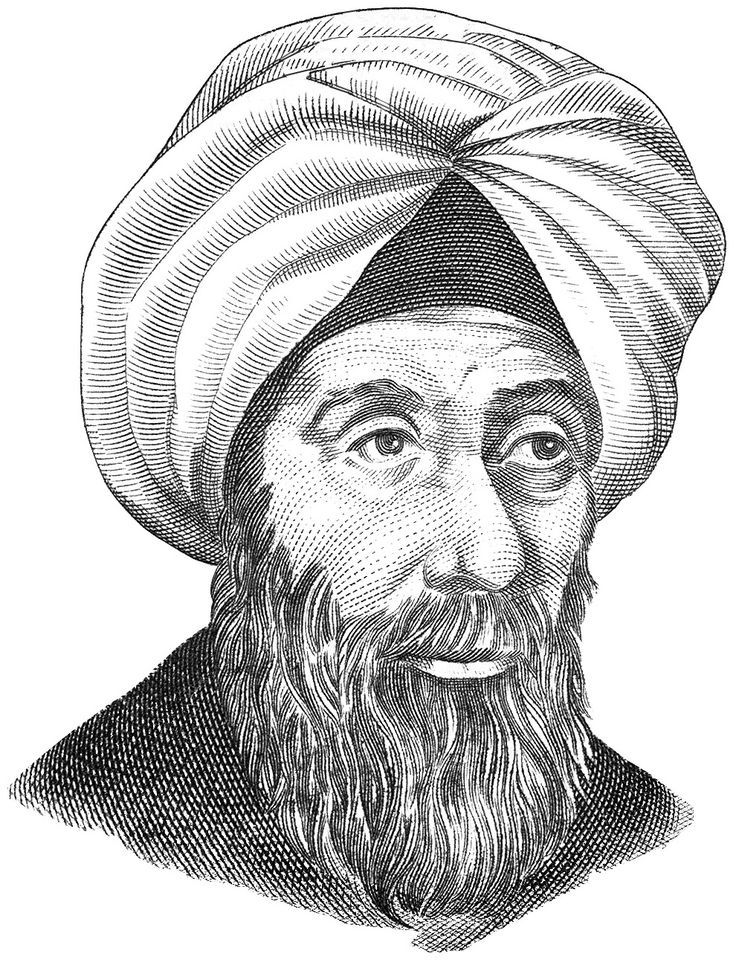
- Ibn al-Haytham (965-1040): Revolutionized optics by explaining light reflection and refraction. He discovered the principles of the camera obscura, laying the groundwork for modern optics.

- Al-Biruni (973-1048): Conducted important observations in gravity, astronomy, and mechanics. He calculated the phases of the Moon and Earth’s circumference and was one of the first to propose Earth’s rotation.

- Nasir al-Din al-Tusi (1201-1274): Developed trigonometry and proposed theories explaining planetary motion. His “Tusi couple” system improved the accuracy of astronomical calculations.
3.3 The Era of Modern Physics
Modern physics emerged through the groundbreaking discoveries of great scientists:

- Galileo Galilei (1564-1642): Used telescopes to observe celestial bodies and formulated the laws of falling bodies and motion. He also promoted experimental science, pioneering the scientific method.

- Isaac Newton (1643-1727): Formulated the laws of motion and universal gravitation, laying the foundations of modern physics. His book Philosophiæ Naturalis Principia Mathematica is considered one of the most influential scientific works.
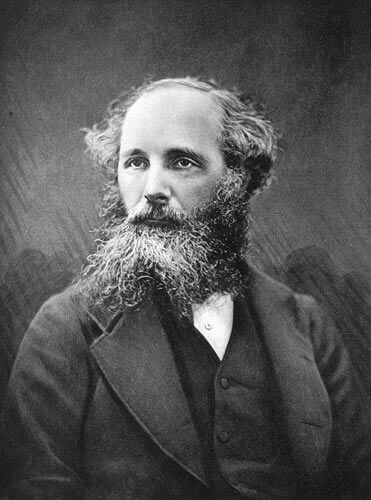
- James Clerk Maxwell (1831-1879): Established the fundamental laws of electromagnetism, enabling the development of modern communication technology. Maxwell’s equations describe all electromagnetic interactions mathematically.

- Albert Einstein (1879-1955): Transformed our understanding of space, time, and gravity with his theory of relativity. His famous equation E=mc² explains the relationship between energy and mass.
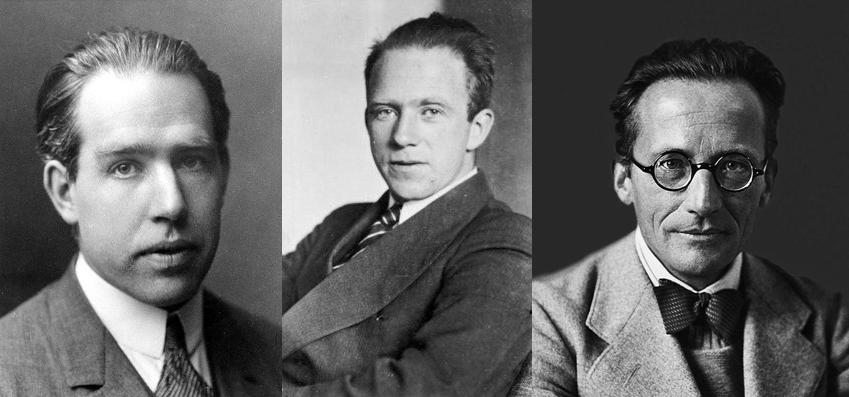
- Niels Bohr, Werner Heisenberg, and Erwin Schrödinger: Developed quantum mechanics, unveiling the nature of subatomic particles. Heisenberg’s Uncertainty Principle defined measurement limits, while Schrödinger’s wave equation introduced the probabilistic nature of particles.
4. Importance of Physics in Daily Life
Physics is not just a theoretical science; it is embedded in various aspects of daily life. Without physics, most of the technology we use and our understanding of natural events would not exist.
4.1 Physics in Technology
Physics plays a critical role in technological advancements, influencing electronics, transportation, and energy production.
- Electricity and Magnetism: The generation, transmission, and use of electricity are based on electromagnetism. Electric circuits, transistors, and semiconductors form the backbone of modern electronics.
- Optics: Applications include laser technologies, holography, fiber-optic communications, and imaging systems. Telescopes and microscopes also result from advancements in optical physics.
- Thermodynamics: Energy conversion and heat transfer processes are crucial in engines, refrigerators, and air conditioning systems.
- Mechanics: The principles of mechanics are fundamental to designing bridges, buildings, and machines.
4.2 Physics in Medicine and Healthcare
Physics has led to significant innovations in medicine:
- Magnetic Resonance Imaging (MRI): Uses strong magnetic fields and radio waves to produce detailed images of internal organs.
- Radiotherapy: Utilizes ionizing radiation to target and destroy cancerous cells.
- Ultrasound: Provides a non-invasive method for imaging internal organs using sound waves.
- Laser Surgery: Applied in eye treatments and cosmetic procedures.
4.3 Physics in Transportation and Communication
Physics underlies modern transportation and communication systems:
- Aerospace and Space Science: The principles of aerodynamics and Newton’s laws govern airplane designs and rocket propulsion.
- Satellite Technology: GPS, weather forecasting, and communication satellites operate based on physics laws.
- Sound and Radio Waves: Radio, television, and wireless communications rely on electromagnetic waves.
5. The Future of Physics
Physics will continue shaping future technological and scientific advancements. Here are some key areas of future exploration:
5.1 Quantum Technologies
- Quantum Computers: Capable of exponentially faster processing than traditional computers.
- Quantum Communication: Developing ultra-secure encryption methods.
- Quantum Sensors: Enhancing precision in medical, geological, and astronomical applications.
5.2 Space Exploration
- Mars Colonization: Developing new materials and propulsion systems for space travel.
- Exoplanet Discoveries: Expanding our knowledge of habitable planets beyond our solar system.
- Black Holes and Cosmology: Utilizing advanced telescopes to explore cosmic mysteries.
5.3 Renewable Energy and Environmental Physics
- Nuclear Fusion: Aiming to create an unlimited clean energy source.
- Solar and Wind Energy: Enhancing efficiency in sustainable energy production.
- Climate Change Modeling: Improving predictions and mitigation strategies.
6. Conclusion
Physics is a fundamental science that allows us to understand the workings of the universe while driving technological progress. Over centuries, brilliant minds have developed theories that serve as the foundation of modern technology. With ongoing discoveries, physics will continue to shape our future, offering new innovations for humanity.
This article explored the history, principles, branches, and real-world applications of physics. I hope it serves as a valuable guide for those interested in this fascinating subject.

 GEOKNIGHTS
Leave a comment