Introduction
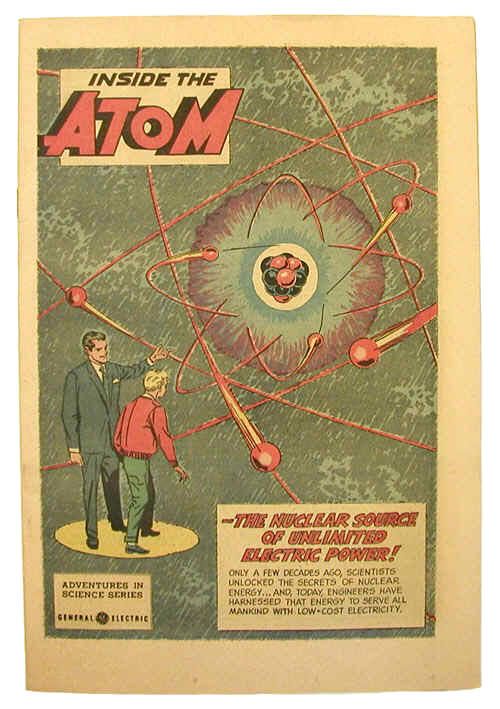
The atom is the fundamental building block of nature. Atoms exist everywhere, in both living and non-living things. The concept of the atom has evolved significantly since ancient times. In its modern form, an atom consists of protons and neutrons in the nucleus, with electrons moving around the nucleus.
Today, we will view atoms through the lens of a science knight. Welcome to the world of science!
In Ancient Greece, the philosopher Democritus looked at matter and thought, “This doesn’t seem like it can be divided forever.” So, he proposed that everything is made of tiny, indivisible particles and called them “atomos” (meaning “indivisible” in Greek). This was a revolutionary idea, but it remained just a thought for centuries. Eventually, scientists came along and said, “Well, actually, atoms CAN be divided.” And so, the atomic model continued to evolve, with discoveries that would change the world—for better or for worse.
Today, we use advanced theories like quantum mechanics to understand the behavior and structure of atoms, but we are still at the beginning of the journey.
Structure of the Atom
An atom consists of three main subatomic particles:
- Protons: Positively charged particles located in the nucleus. The number of protons defines which element an atom belongs to. A hydrogen atom has 1 proton, while a helium atom has 2 protons.
- Neutrons: Neutral particles that stabilize the nucleus. Different numbers of neutrons create isotopes of an element (e.g., Carbon-12 and Carbon-14).
- Electrons: Negatively charged particles that orbit the nucleus at high speeds in energy levels (or shells). Electrons are key players in chemical bonding.
Despite what our instincts might tell us, the majority of an atom is empty space. The nucleus contains almost all of an atom’s mass, but it is tiny compared to the overall size of the atom. Think of it like a marble in the middle of a football stadium. The electrons, although very light, move incredibly fast, creating the illusion of a solid structure.
History of Atomic Theory
The Ancient Greeks and the First Atomic Ideas
As mentioned earlier, Democritus and his friend Leucippus theorized that everything was made of indivisible atoms. However, Aristotle had a more popular idea—he argued that everything was made of four elements: Earth, Water, Air, and Fire. Since Aristotle had a fan club, his idea dominated for centuries, while Democritus’ theory was ignored.
For a long time, the idea of the atom wasn’t really questioned. Wars, religion, and medieval superstitions prevented the scientific community from exploring new ideas. Then came the Modern Age.
Modern Atomic Theory: The Great Breakthrough
The first scientist to revive the atomic idea was John Dalton in the 19th century. His theory stated that:
- Matter is made of small, indivisible particles called atoms.
- Atoms of the same element are identical in mass and properties.
- Different elements have different types of atoms.
- Atoms combine in fixed ratios to form compounds.
Dalton’s model was not entirely accurate, but it was a crucial first step toward modern chemistry.
The Discovery of Subatomic Particles
The 20th century was truly the golden age of atomic science.
- J.J. Thomson (1897): Using a cathode ray tube, he discovered electrons—small, negatively charged particles inside atoms. This proved that atoms were divisible, contradicting Dalton’s model. He proposed the Plum Pudding Model, where electrons were embedded in a positive “pudding.” However, this model couldn’t explain atomic stability, radioactivity, or isotopes.
- Ernest Rutherford (1911): Conducted the gold foil experiment and discovered that atoms have a tiny, dense, positively charged nucleus. His model suggested that electrons orbit the nucleus, much like planets orbit the Sun.
- Niels Bohr (1913): Improved Rutherford’s model by proposing that electrons travel in specific orbits (energy levels). This explained why hydrogen atoms emit light in distinct colors.
- James Chadwick (1932): Discovered the neutron, completing our understanding of the atom’s nucleus.
A question that always crosses my mind is: How did these people even think of these things? It’s almost like they imagined the invisible. But in reality, each scientist built upon previous discoveries—Marie Curie’s research on radioactivity was a foundation for Chadwick’s work on neutrons.
Physical and Chemical Properties of Atoms
- Atomic Number: The number of protons, which defines an element.
- Mass Number: The total number of protons and neutrons.
- Isotopes: Atoms of the same element with different numbers of neutrons (e.g., Carbon-12 vs. Carbon-14).
Chemical Bonds: How Atoms Connect
Atoms don’t like being lonely, so they bond with each other to achieve stability. Their goal? To reach an ideal electron configuration—also known as the “octet rule.”
Ionic Bond
- Formed when electrons are transferred from one atom to another.
- Usually occurs between metals and non-metals.
- Example: Sodium chloride (NaCl) forms when sodium gives up an electron to chlorine.
Covalent Bond
- Formed when two atoms share electrons.
- Typically occurs between non-metals.
- Example: Water (H₂O), where oxygen shares electrons with hydrogen atoms.
Metallic Bond
- Unique to metals, where electrons move freely in a “sea of electrons.”
- This is why metals conduct electricity and are malleable.
Electronegativity: The Electron Tug-of-War
Electronegativity is a measure of how strongly an atom pulls electrons toward itself in a bond. The highest electronegativity belongs to fluorine (F).
Hydrogen Bonds: Weak but Essential
- Special type of dipole-dipole interaction between hydrogen and highly electronegative atoms (O, N, F).
- Example: Water molecules stick together due to hydrogen bonding, giving water its unique properties like high boiling point and surface tension.
Conclusion & Future Topics
In this article, we explored:
✔ What an atom is
✔ The history of atomic discoveries
✔ The structure and properties of atoms
✔ Different types of chemical bonds
In the future, I plan to delve deeper into modern technologies like nuclear energy and advanced atomic models. However, before that, I am starting a Periodic Table Series, where I will write detailed articles about each element based on their atomic number.
Thank you for reading this scientific journey! 🚀

 GEOKNIGHTS
Leave a comment