Helium: The Light and Mysterious Element of the Universe
1. Introduction
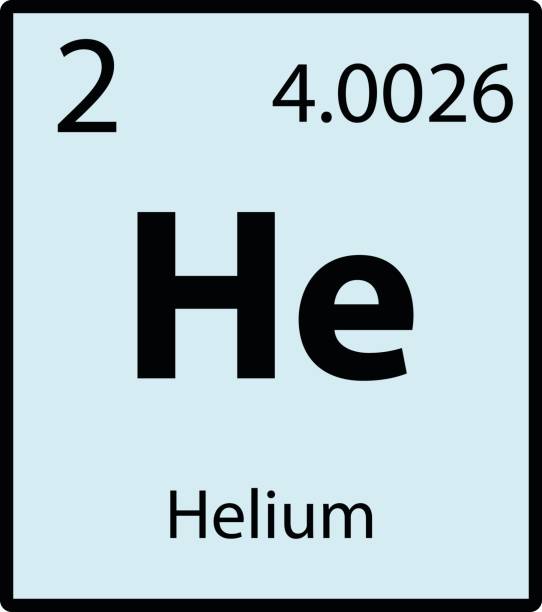
Helium is the second element in the periodic table and belongs to the noble gases group. This colorless, odorless, and tasteless gas is rare on Earth, despite being the second most abundant element in the universe after hydrogen. The reason for its rarity on Earth is a topic for another discussion.
In this article, you will find detailed information about the history, physical and chemical properties, uses, production, and future of helium. Welcome to the world of science!
2. Discovery and History of Helium
Helium was first observed in 1868 by the French astronomer Pierre Janssen during a solar eclipse. This element was identified through spectral analysis and was named “helium”, derived from the Greek word helios, meaning “sun.” Later, in 1895, Sir William Ramsay discovered its presence on Earth.
The discovery of helium sparked excitement in the scientific community. At the time, scientists believed that all elements on Earth had already been identified—and even today, some scientists still think this way. However, when helium was detected in the solar spectrum, it proved that not all elements were exclusive to Earth.
Ramsay later conducted experiments on the mineral uraninite (pitchblende) and discovered that helium gas was released due to radioactive decay. This provided concrete proof of helium’s natural existence on Earth.
3. Physical and Chemical Properties
Some of the key properties of helium are:
- Atomic number: 2
- Atomic weight: 4.0026 u
- Melting point: -272.2°C
- Boiling point: -268.9°C
- Density: 0.1786 g/L (STP)
- Electron configuration: 1s²
Helium’s most striking property—aside from making your voice sound like a songbird—is that it has the lowest boiling point of any element. Additionally, helium is chemically inert, meaning it does not easily form compounds with other elements.
3.1 Different Forms of Helium
Helium has two primary isotopes:
- Helium-3: A rare isotope used in fusion research.
- Helium-4: The most abundant isotope found in nature and the one used in commercial applications.
Liquid helium exhibits a superfluid state, meaning that at extremely low temperatures, it can flow without friction along surfaces. This behavior is a fascinating subject in quantum mechanics.
4. Occurrence and Extraction of Helium
Despite its abundance in the universe, helium makes up only 0.0005% of Earth’s atmosphere. Most helium on Earth is produced by the radioactive decay of elements like uranium and thorium and is trapped in natural gas deposits. Helium is extracted by separating it from natural gas through fractional distillation.
4.1 Helium Reserves
The largest helium reserves are found in:
- United States (~40% of the world’s supply)
- Qatar
- Algeria
- Russia
- Canada
The U.S. Federal Helium Reserve in Texas was once the world’s primary helium supplier. However, due to decreasing reserves, the sustainability of helium production has become a major concern.
4.2 Methods of Obtaining Helium
- Separation from natural gas: The most common commercial production method.
- Radioactive decay: Helium forms as a byproduct of uranium and thorium decay.
- Moon mining: Future plans involve extracting helium-3 from the Moon for energy production.
5. Uses of Helium
Helium has a wide range of applications. Some of its primary uses include:
5.1 Balloons and Airships
Helium is used instead of hydrogen in balloons and airships because it is lighter than air and non-flammable. In the past, hydrogen was used in airships, but its flammability led to disasters. Helium eliminated this risk.
5.2 Cooling Systems
Due to its ability to remain in a liquid state at extremely low temperatures, helium is crucial for cooling superconducting magnets in MRI (Magnetic Resonance Imaging) machines. It plays an essential role in preserving the efficiency of superconductors.
5.3 Welding and Industrial Applications
Helium is used as a shielding gas in welding, preventing metal oxidation. It is particularly important for aluminum and titanium welding in industries like aerospace and construction.
5.4 Aerospace and Space Exploration
Space agencies like NASA use helium for:
- Pressurizing rocket fuel tanks
- Cooling rocket engines
- Ensuring safety in spacecraft systems
Helium is essential for launching and operating spacecraft.
5.5 Deep-Sea Diving
Helium is used in breathing gas mixtures for deep-sea divers to replace nitrogen. This helps prevent nitrogen narcosis, a dangerous condition that occurs at extreme depths. Thanks to helium, divers can safely explore greater depths without cognitive impairment.
5.6 Nuclear Fusion and Scientific Research
Helium-3 is considered a promising fuel for nuclear fusion. Since it allows for clean and efficient energy production, scientists are actively researching its use in future fusion reactors.
6. Helium Scarcity and Future Prospects
Helium is a non-renewable resource. Once released into the atmosphere, it escapes into space and cannot be recovered. With increasing helium consumption, prices are rising, and scientists are searching for new sources.
Some proposed solutions include:
- Developing helium recycling systems to reduce waste.
- Exploring new helium reserves on Earth.
- Extracting helium-3 from the Moon or gas giants.
7. Conclusion
Helium is a crucial element in many industrial and scientific applications. However, its limited supply raises concerns about sustainability. To ensure a stable future supply, new conservation policies and recycling technologies are necessary.
The future of helium will play a key role in the advancement of science and technology. 🚀

 GEOKNIGHTS
Leave a comment