Today we’re going to learn about the most terrifying animals and nature before dinosaurs existed. Most people are afraid of dinosaurs, but that’s only because they don’t know about the Carboniferous Era. Long before dinosaurs ruled the Earth, our planet was already teeming with life strange, ancient, and beautiful in its own way. Hundreds of millions of years before dinosaurs walked the Earth, our planet was already full of life strange, huge, and completely different from today. About 359 to 299 million years ago, during the Carboniferous Era, Earth was a warm and swampy world covered with endless green forests. Giant trees like Lepidodendron and Calamites grew taller than buildings, and huge ferns filled the air with oxygen. The forests were so dense that sunlight could hardly reach the ground. The soil was wet, and rivers and swamps spread across the land, creating a mysterious green world.
The name “Carboniferous” means “coal-bearing.” Geologists gave it this name because the dead plants from that time slowly turned into coal a black rock that we still use for energy today. But this period was more than just the origin of coal. It was a time when life, air, and the planet itself began to change forever.
The Green Power of the Planet
The Carboniferous forests were like the lungs of the Earth. They produced massive amounts of oxygen through photosynthesis. Scientists believe that oxygen levels reached around 35%, compared to only 21% today. This high oxygen made it easier for living things to breathe and grow bigger but it also made the world dangerous. Even a small spark could start a giant wildfire. The forests were filled with enormous plants. Lepidodendron

Lepidodendron trees, with their scaly trunks, could reach up to 40 meters tall.
Calamites,
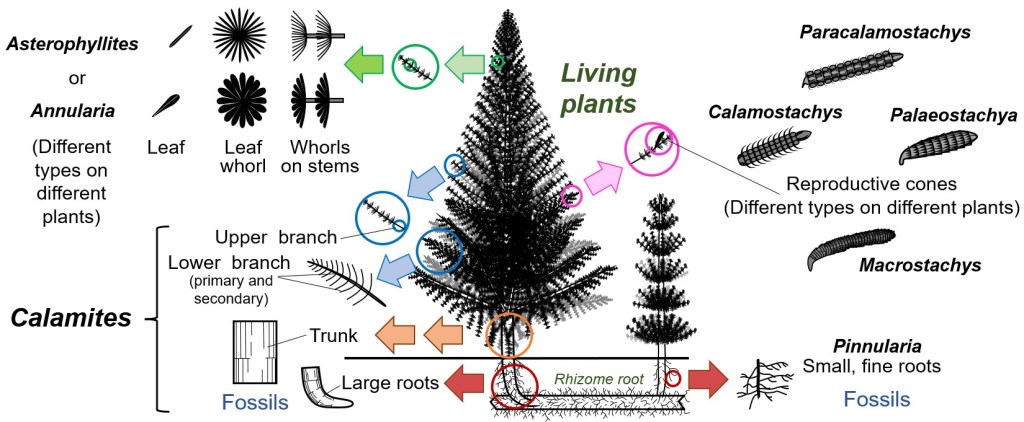
Calamites, which looked like huge bamboo, grew near rivers. Giant ferns and mosses covered everything, turning the land into a green jungle.
When these plants died, they didn’t fully rot because the swamps lacked oxygen. Layers of dead plants piled up for millions of years. The heat and pressure from the Earth slowly turned them into coal. Every piece of coal we use today is a memory of that ancient forest time itself turned into stone.
The Age of Giants
The Carboniferous Era was also the age of giant animals. Because there was so much oxygen in the air, insects and amphibians could grow much larger than today. One of the most famous creatures was Meganeura, a dragonfly

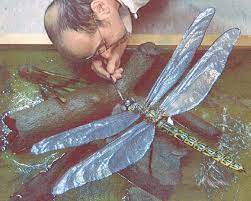
with wings almost 70 centimeters wide about the size of a modern bird. On the forest floor crawled Arthropleura, a giant millipede that could reach 2.5 meters long. It was one of the largest invertebrates that ever lived. In the swamps lived huge amphibians early relatives of frogs and salamanders. Some looked like crocodiles and hunted smaller animals in shallow water. They were among the first vertebrates to live both in water and on land. This was a key step in evolution it allowed life to spread across the continents. The Carboniferous was truly a time of experimentation in nature, when new forms of life appeared everywhere.
Fire and Change
But this rich, oxygen-filled world was also unstable. The same oxygen that helped life grow also made the atmosphere very easy to ignite. Forest fires were common and could destroy large areas of land. Meanwhile, Earth’s continents were moving. Landmasses slowly came together to form Pangaea, a giant supercontinent. This movement changed weather patterns and made the climate drier. The warm, swampy forests began to shrink. Oxygen levels dropped, and the giant insects and amphibians that had ruled the Carboniferous started to disappear.
By the end of the period, the planet was cooler and less tropical. The Carboniferous world had ended but it left behind something that still affects us today: coal, the energy source that powers human civilization.
The Legacy of the Carboniferous
The Carboniferous didn’t just give us coal; it helped shape modern life. It was during this time that seed plants first appeared, replacing plants that needed swamps to reproduce. Seeds allowed plants to grow in new, dry places leading to the forests we know today. The high oxygen also affected the chemistry of the atmosphere and oceans, helping to regulate climate. When all that carbon from the forests was buried underground, it reduced carbon dioxide in the air and cooled the planet. In fact, this process caused one of Earth’s first ice ages. Millions of years later, humans began to dig up and burn that same carbon turning those ancient forests back into carbon dioxide and warming the planet again. The story of the Carboniferous is, in a way, the story of our energy how nature once cooled the world, and how we are now reversing that process.
When Life and Air Became One
The Carboniferous Era was a time of connection between life and the atmosphere. Plants created the oxygen that allowed animals to grow larger, and animals helped shape the land. It was a time when life shaped the air, and the air shaped life. Every breath we take today carries the legacy of that green, ancient world. Every spark that burns coal is a whisper from forests that lived hundreds of millions of years ago. Beneath our feet, hidden deep in the ground, lie the remains of that living planet compressed, silent, and waiting. The Carboniferous was not just another chapter in Earth’s history.
It was the moment when Earth learned to breathe.

 GEOKNIGHTS
Leave a comment